
INDIA’S WOW OOH ECOSYSTEM
The e4m OOH Conference sounds like a pivotal gathering for the future of Out-of-Home advertising—where creativity meets accountability. It’s exciting to see how data, innovation, and strategic thinking are transforming OOH into a high-impact, measurable medium in India’s evolving media landscape.
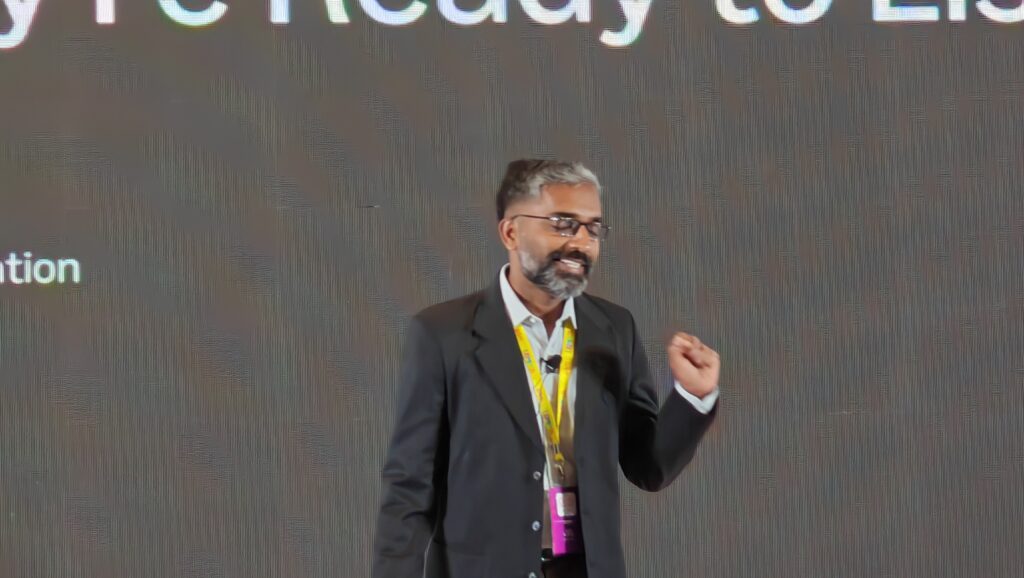
Shilpi Barkam’s (Amazon India) session at the e4m OOH Conference highlights that modern advertising suffers from a critical receptivity gap. Shilpi Barkam of Amazon India highlighted that 70% of Indian consumers skip digital ads due to fatigue, emphasizing that the core challenge is timing rather than just creative clutter. Effective marketing requires aligning brand messages with consumer mindsets when they are naturally receptive, rather than interrupting them during daily activities.
The core issue has shifted from media reach to relevance.Key observations from the conference include:High Ad-Skip Rates: 70% of Indians skip digital ads due to growing fatigue.
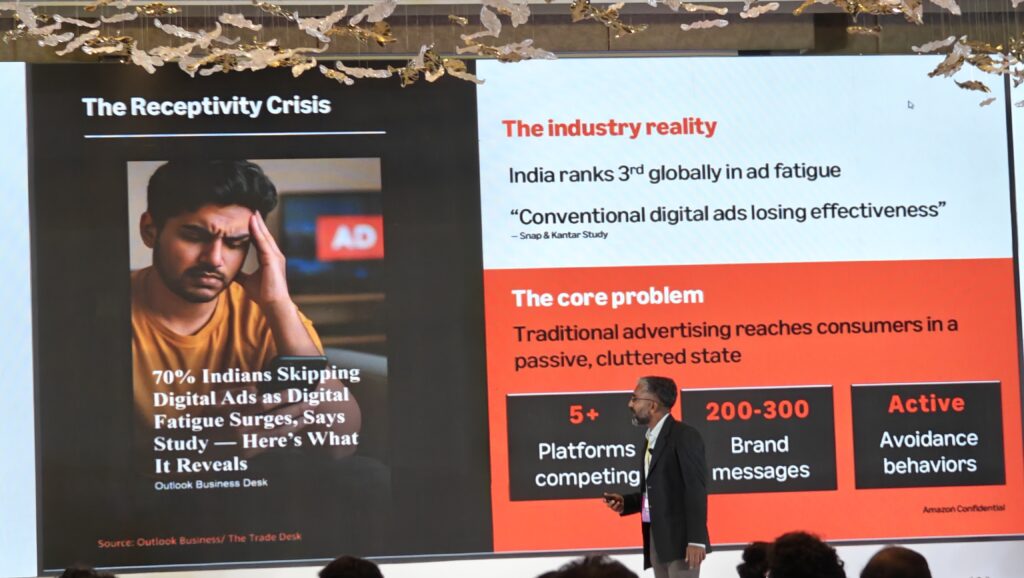
The “Mid” Interruption: Advertisers typically reach consumers mid-commute, mid-scroll, or mid-episode when they are least receptive.
Mindset over Clutter: The problem isn’t necessarily the creative quality, but rather that consumers are interrupted when they do not want information.
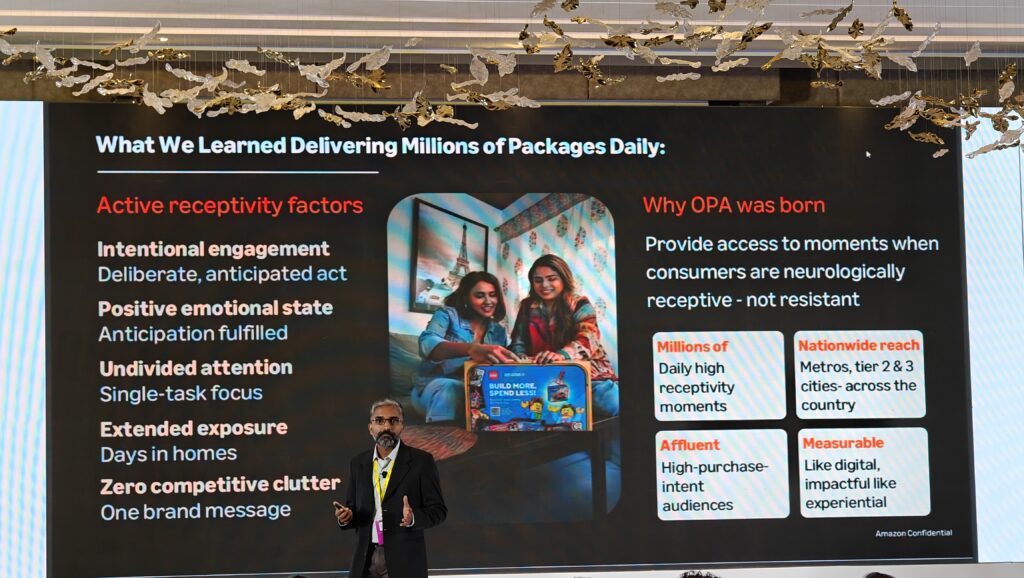
To bridge this receptivity gap, marketers must transition from interrupting consumers to reaching them during moments when they are naturally open to messaging (such as Out-Of-Home environments where they aren’t actively trying to consume digital content).
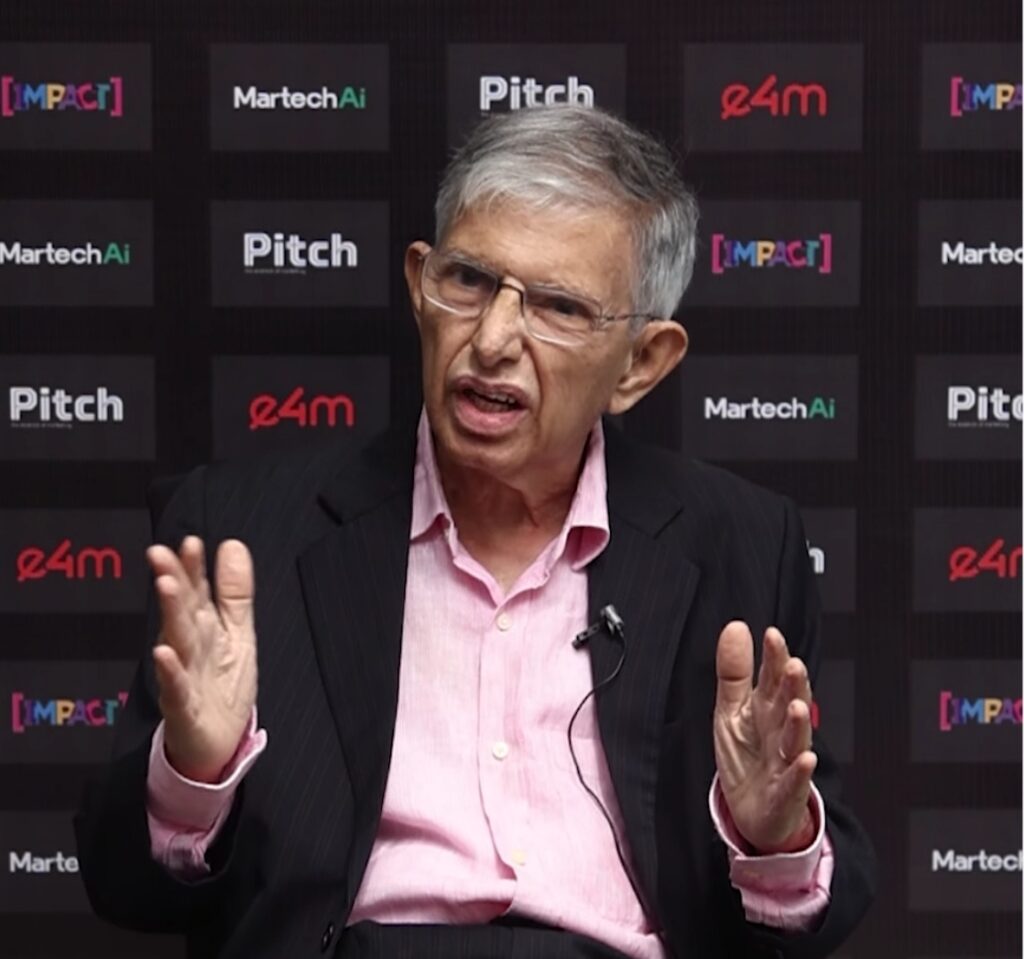
Sam Balsara, Chairman of Madison World, highlighted that while India’s outdoor market is growing, its share of total ad expenditure has declined from 4.3% in 2024 to an expected 2.9% in 2026. To capture a 10% market share, he urged the industry to focus on innovation, technology, and measurable returns.
Balsara proposes an eight-point strategy to scale the OOH industry, focusing on expanding the advertiser base to include luxury brands in DOOH and leveraging marketing testimonials for credibility. The strategy calls for elevating creative quality through internal agency teams and optimizing sites based on visibility, alongside driving technological innovation and using AI. Finally, it emphasizes reintegrating media planners for omnichannel campaigns and establishing quarterly advertiser forums to analyze global benchmarks.
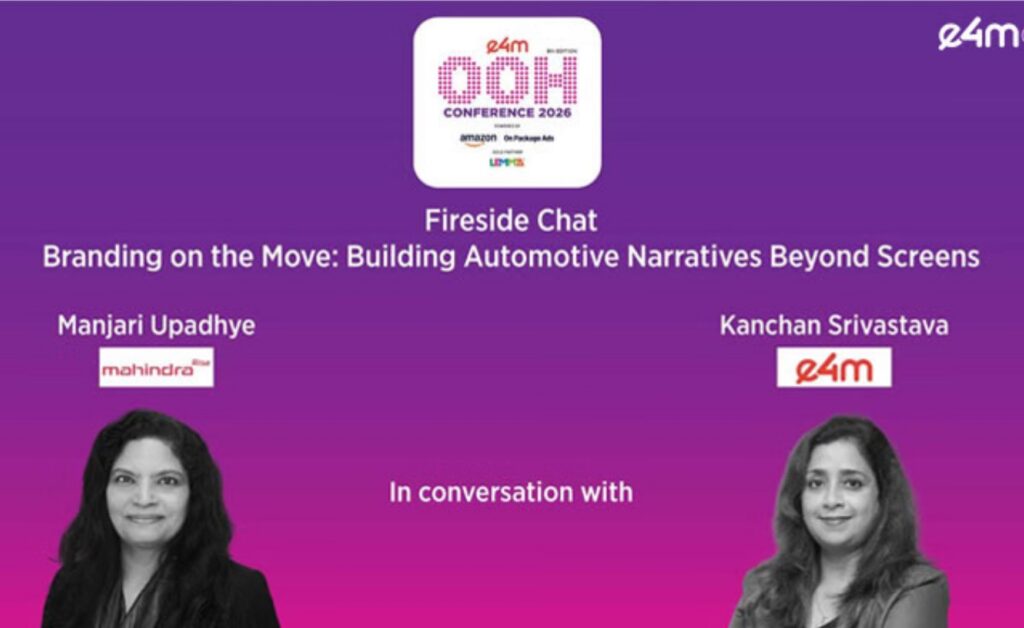
During her fireside chat with Kanchan Srivastava at the e4m OOH Conference, Manjari Upadhye (CMO – Auto, Mahindra and Mahindra Limited) outlined a strategic blueprint for real-world automotive marketing. Her presentation, titled “Branding on the Move: Building Automotive Narratives Beyond Screens,” focused on transforming Out-of-Home (OOH) media from static, empty impressions into highly contextual consumer experiences.
She highlighted environmental context and a clear call to action as foundational for effective outdoor advertising. India’s expanding transit networks present significant opportunities for connecting with consumers in motion. Effective OOH requires instant visual clarity and high-impact storytelling to capture active attention rather than just passive visibility. Finally, physical billboards must bridge to digital channels to guide consumers through the purchasing funnel.
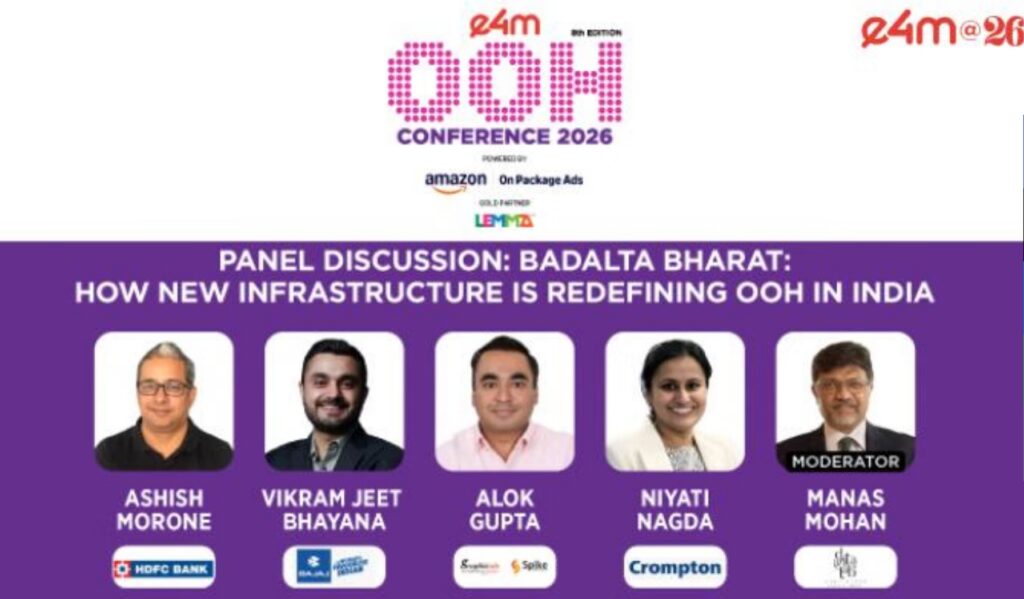
At the e4m OOH Conference 2026, the “Badalta Bharat” panel explored how India’s infrastructure boom is transforming Out-of-Home (OOH) advertising from a supplementary medium into a primary, engagement-driven channel.
Key takeaways from the session include:
Shift to High-Dwell Environments: Panelists noted that modern transit hubs like airports and metro stations capture audiences with high dwell times. These spaces offer ideal environments for meaningful brand engagement.
Public Utility Integration: HDFC Bank’s Ashish Morone highlighted how OOH players are successfully managing public utilities (e.g., bus shelters) through revenue-surplus models. He emphasized that infrastructure-led OOH provides unmatched reach compared to other media.
Responsible Advertising: While infrastructure OOH creates great opportunities, the panel cautioned against intrusive formats. Morone specifically pointed out that LED hoardings with moving content can distract drivers, urging the industry to make conscious choices about placement.
Focus on Attention & Precision: The discussion underscored that OOH has evolved far beyond simple visibility. To maximize impact, brands must focus on data-driven targeting, precision, and scaling innovation.